

Not Knowing Means Nothing
Your ignorance does not cancel truth

There is a meme circulating the internet at the moment that reads something to effect of:
“If you went to school in the ’70’s, ’80’s, or ’90’s, how many classmates did you know who suffered from gender dysphoria?”
The question is deliberately designed to produce a single answer: “None.”
And the “logic” that this predetermined answer is meant to invoke is that gender dysphoria is a new thing. Following from that, it must not be real. And following from that, it is yet another sinister plan by the libs and the so-called Alphabet Mafia to undermine the very framework of society and God’s law.

It’s always a little bit cute and even charming when people with no meaningful understanding of science try to position themselves as expert social scientists or zoologists with years of study on the human animal. It’s adorable when they forward arguments that violate the most basic rules of logic and act as though their conclusions are “obvious.”
And by “cute,” “charming,” and “adorable,” I mean, “really fucking dangerous.” Because not only do these uneducated bigots get to vote, they spread their ignorance to like-minded fools, and enough of them believe it until innocent people get hurt.
The latest example is Marlow Trottie, a trans woman found murdered in Alexandria, Louisiana on June 8. During Pride Month.
So allow me to explode the false equivocation and casual fallacy of this genuinely stupid and dangerous argument.
Ignorance of a Fact Does not Make it False
Let’s start with the basics. Whether or not you personally knew anyone with gender dysphoria when you were growing up does not mean gender dysphoria doesn’t exist or is a new thing. As hard as it is for human beings in general and conservative Americans in particular to grasp that their own personal experience is not universal, not knowing a thing in the past, does not mean it isn’t true.
When I was eight years old, I didn’t realize that Egypt was in Africa. I didn’t understand that plants made food from water and sunlight. I did not know that virtually every town and city in my state had a name derived from French or a Native American language, and that the contemporary residents of said state mispronounced the hell out of those words, so that they were nearly unrecognizable from the original.
My ignorance of these facts did not make them false.
Moreover, to employ a cliché, you don’t know what you don’t know. I have no idea how many of the people I knew in my childhood and youth were experiencing gender dysphoria, but I did know one: Me.
And none of my friends and associates knew. They might have thought I was weird. In high school, they might have thought I was gay (since I was into music and theater). But no one knew I was experiencing gender dysphoria. Not even my parents.
But I was, and that leads to the less basic, more complex issues of being a kid in the Seventies and a teen in the Eighties. The language to speak of these things did not exist in my world. I didn’t know I had gender dysphoria, because the experience I was having had not yet been named. I just knew I was different.
And I was strongly encouraged never to speak of it.
Forced Silence
My childhood was spent in a Southern Baptist church that taught an especially toxic version of masculinity and faith. Obedience was a very big thing in that church, and I was the goodie-goodie kid who absorbed and internalized that. For the most part, I did what I was told, especially since the consequences for stepping out of line in my house were terrifying and retributive.
But it wasn’t just church. School expected me to follow social rules, too. Not only was I expected to be a good and obedient student, I had to conform, to fit in with the other kids, especially the boys.
And though I tried very hard, I couldn’t pull it all the way off.
I was weird. I liked comics at a time when that wasn’t cool. I became obsessed with Star Wars and science fiction. I read fantasy novels. And I expressed these interests on the playground, where they were not appreciated by those who conformed correctly.
I was bullied emotionally and physically for being different. I was the butt of everyone’s joke until high school. I tried to bring these complaints to my parents, and they were largely dismissed. My dad’s solution was to tell my brother he had to protect me from the bullies. My mom’s was to tell me to blow it off, act like it didn’t hurt, like it wasn’t crushing to be relentlessly teased for being my authentic self.
At home, being different was a source of misery. My mother did not tolerate weird. She made fun of me for being into what she considered strange hobbies. She did not want these things expressed in public. If I wore what she thought were the wrong clothes, or talked about my interests to other adults we knew, she would be overcome with embarrassment. She practically apologized to the community for having a weird child.
This was not an environment where I could even begin to wonder if I might be a girl. It was not one in which I could acknowledge that being defined as a boy and man did not sit comfortably with me. The message was: That would be weird. And being weird is bad.
But that did not change the fact that I am trans. It only meant that I was not allowed to understand or explore that reality. It wasn’t safe.
Oh, yeah. Science is real.
So, bringing this back around to the meme, the new phenomenon is not that there suddenly more gender-nonconforming kids. It’s that, unlike for my peers and I, it is now safer to express these things, AND there is better science to understand them. There is acceptance of a broader diversity of humanity and gender (at least among those who believe in science – biological and social) than there was when children like me had questions they didn’t dare to ask, feelings they knew were dangerous to express.
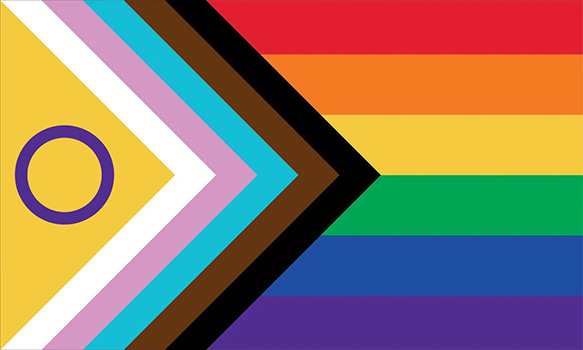
Let me state emphatically that this is a Good ThingTM. It is not moral rot. It is not the unraveling of society. It is coming to a more-perfect understanding of humanity and the society in which we live.
I know it causes discomfort for the people for whom this represents a significant change. I know it is different from the world in which they were raised. But the simple truth is it does them no harm. At all.
But the wrongheaded, belligerent attacks they make against it do cause harm. Marlow Trottie is only the most recent proof. We were still getting out minds around Juniper Blessing, when Marlow became the latest victim of this illogical, inhumane stupidity.
Let me be clear: You don’t get to claim scientific certainty, when you don’t believe in evolution but do believe humans and dinosaurs coexisted at the same time in ancient history. Those positions forfeit any right you have to argue against science with ignorance. If your position requires logical fallacies to support it, your so-called truth is bullshit.
So please, let’s let the real biologists, zoologists, psychologists, social scientists, and medical doctors make the arguments about what is real and what isn’t with regard to gender dysphoria. You know – the ones who submit peer-reviewed research that is held to the highest standards of academic rigor. Not the pseudoscientists. Not the fire-and-brimstone preachers. Not the laypeople whose understanding of scientific research and knowledge ended in sixth grade.
I know a lot of people that I did not know were queer when we were in school. It is a near-certainty that you did, too.
Our ignorance does not change their reality. Or mine.
Author’s Note: I recognize that this is not the usual tone I promised to take in this space. But frankly, it’s Pride Month, so I’m in a bit of a brick-throwing mood. Moreover, the willful ignorance that these brain donors are pushing is literally killing people. Sometimes, the truth needs told like it is.
Phoebe Ravencraft is a transfemme author of queer fantasy fiction. Her latest project, a trans fairytale, launches soon on Kickstarter. Click or tap here to follow the campaign.
